Copyright © 2011 by Gary Konecky
We have spent a fair amount of time exploring the bible and various teachings on sexual orientation. Having done so, I would be remiss if I did not point out a surprising truth. When we speak of the bible, most people assume that they are all referring to the same book. This is not so.
When people use the term the Old Testament (a term which some Jews find offensive), they assume it is the bible that the Jewish people use. This is not so.
Even the Christian bible has variations among the various Christian faiths.
How and why these differences exist is a fascinating topic and it is also a topic well beyond the scope of this series.
Below are a series of charts that serve to highlight the differences in the various bibles.
Hebrew Bible (Tanakh) and Christian Bibles
It is noteworthy that the Christian “Old Testament” not only
has a different arrangement of the books of the Hebrew bible, but it also
contains a lot of material that is not present in the Hebrew Bible. Despite having common ancestors, the Hebrew
bible and Christian “Old Testament” reflect very different perspectives on
matters of faith and belief as evidenced by the way the books of the bible are
organized.
|
HEBREW BIBLE |
ORTHODOX BIBLES |
CATHOLIC BIBLE |
PROTESTANT BIBLE |
|
Torah / Books of Moses |
Pentateuch |
Pentateuch (Law) |
Law (Pentateuch) |
|
Nevi'im / Former Prophets |
Historical Books |
Historical Books |
Historical Books |
|
Nevi'im / Latter Prophets |
|||
|
Khetuvim / Writings |
Poetic Books |
Wisdom Books |
Wisdom Books |
|
. |
Prophets |
Prophets |
Prophets |
Source for the above chart: http://catholic-resources.org/Bible/Heb-Xn-Bibles.htm
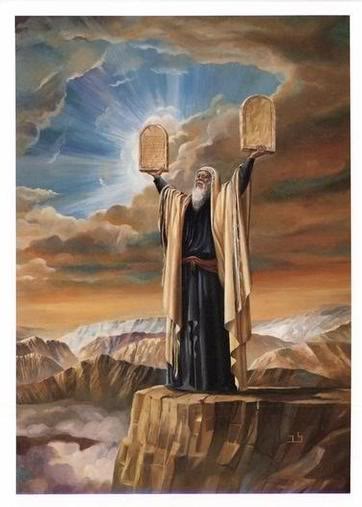
The Ten Commandments
The phrase The 10 Commandments is actually a mistranslation. A more accurate translation would be The 10 Statements. Furthermore, according to Jewish tradition, G-d gave the Jews 613 commandments.
Furthermore, not only are their differences in the Hebrew and various Christian bibles (as shown above), but also there are differences in things as fundamental as The Ten Commandments. Not only are there issues of differing translation (such as murder vs. kill and covert vs. take), but there are even differences in the commandments themselves (do not worship idols) and in the numbers of the commandments themselves.
|
|
|
Anglican, |
|
Roman |
||
|
|
|
Reformed, |
Orthodox |
Catholic (RC) |
||
|
|
|
and other |
and other |
and some |
||
|
Commandment |
Jewish |
Christian |
Christian |
Lutheran |
||
|
|
|
|
|
|
||
|
I am the Lord your God |
1 |
preface |
1 |
1 |
||
|
You shall have no other gods before me |
1 |
1 |
1 |
1 |
||
|
|
|
|
|
|
||
|
You shall not make for yourself an idol |
2 |
2 |
2 |
|
||
|
|
|
|
|
|
||
|
Do not take the name of the Lord in vain |
3 |
3 |
3 |
2 |
||
|
|
|
|
|
|
||
|
Remember the Sabbath and keep it holy |
4 |
4 |
4 |
3 |
||
|
|
|
|
|
|
||
|
Honor your father and your mother |
5 |
5 |
5 |
4 |
||
|
|
|
|
|
|
||
|
You shall not kill/murder |
6 |
6 |
6 |
5 |
||
|
|
murder |
murder |
murder |
RC: kill |
||
|
|
|
|
|
|
||
|
You shall not commit adultery |
7 |
7 |
7 |
6 |
||
|
|
|
|
|
|
||
|
You shall not steal/kidnap |
8 |
8 |
8 |
7 |
||
|
|
kidnap |
steal |
steal |
steal |
||
|
|
|
|
|
|
||
|
You shall not bear false witness against your neighbor |
9 |
9 |
9 |
8 |
||
|
|
|
|
|
|
||
|
You shall not covet/take your neighbor's wife |
10 |
10 |
10 |
9 |
||
|
|
covert |
take |
take |
take |
||
|
|
|
|
|
|
||
|
You shall not covet/take anything that belongs to your |
10 |
10 |
10 |
10 |
||
|
neighbor |
covert |
take |
take |
take |
||
|
|
|
|
|
|
||
|
This chart is adapted from: http://en.wikipedia.org/wiki/10_Commandments |
|
||||
Additionally, there are differences in the commandments themselves as given in the Hebrew bible for the commandment to keep the Sabbath, for honoring your parents, and for coveting your neighbor’s property.
The Psalms
Depending on what translation of the Hebrew bible into English you are reading will also bear on the meaning of what you are reading. The Hebrew bible was at one point translated into ancient Greek. At another time, the ancient Greek was translated into Latin. At still another point, the biblical Hebrew was translated into Latin. Any of these translations then made their way into English. As we move from Hebrew into any translation, meanings sometimes are lost. Moving from translation to translation to English makes this only more so. Lastly, every translation has a point of view and any ambiguities are resolved in accordance with the teachings of the religion or faith that will be using that translation.
The area in which the effects of the translation into Greek can be seen most clearly is in the Book of Psalms, where the very numbering of the psalms varies according to if it was first translated into Greek.
|
Hebrew |
Greek |
|
|
|
psalm |
psalm |
|
|
|
numbers |
numbers |
|
|
|
1–8 |
1–8 |
|
|
|
9–10 |
9 |
|
|
|
11–113 |
10-112 |
|
|
|
114–115 |
113 |
|
|
|
116 |
114-115 |
|
|
|
117-146 |
116-145 |
|
|
|
147 |
146-147 |
|
|
|
148-150 |
148-150 |
|
|
|
|
|
|
|
|
Source: http://en.wikipedia.org/wiki/Psalms |
|||
According to the Syrian Orthodox Church the psalms are numbered through number 155.
The Eastern Orthodox Church also includes psalm 151, which is not included in the Hebrew bible.
Additional food for thought
While researching the material presented here, I came across an interesting website: http://www.diffen.com/difference/Christianity_vs_Judaism. While I do not agree completely with the analysis presented here, I do think this is an excellent starting point for those who are curious about the differences between Christianity and Judaism.
Another website, http://www.youtube.com/watch?v=80qn2YjxUng, also had a well throughout analysis of the Hebrew Bible and Old Testament differences.
